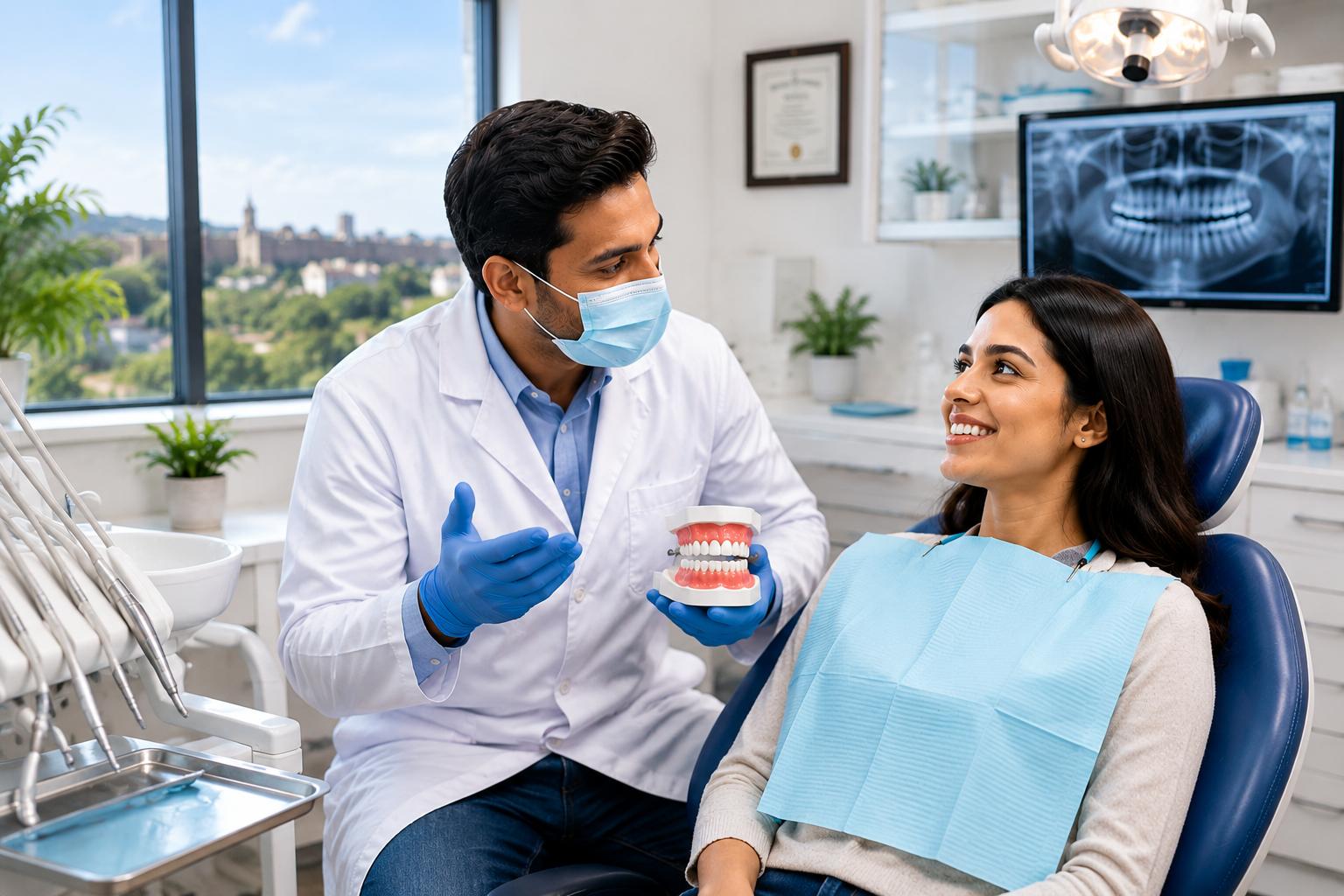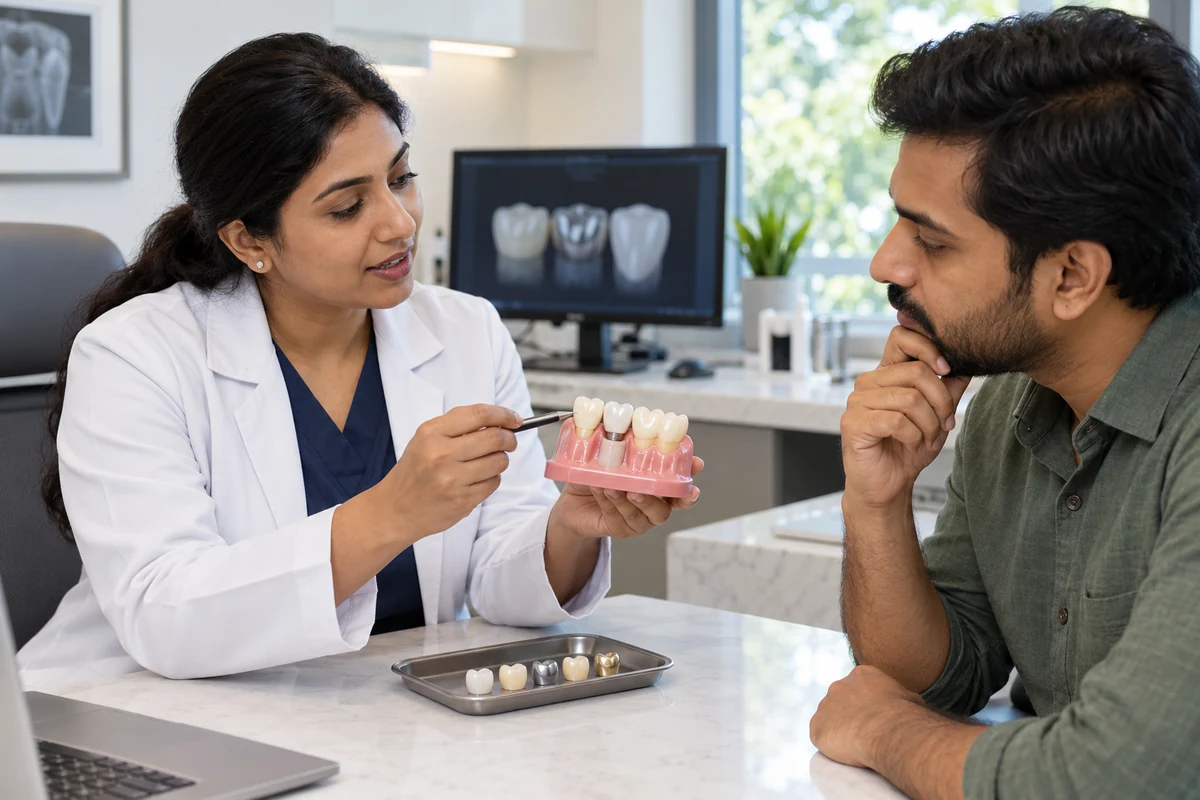
Choosing between the types of dental crowns can feel confusing. Porcelain looks natural, zirconia is known for strength, and metal has a long history in restorative dentistry. But which option belongs on your tooth?
The answer depends on more than appearance. Tooth position, remaining tooth structure, bite, grinding habits and budget all influence the decision.
At Smilescape Dental Care in Tiruvallur, patients can enquire about crown and bridge treatment and discuss suitable options after an examination. The branch lists these restorations among its dental services. Smilescape
What is a dental crown?
A dental crown is a custom cap that covers a prepared tooth. It can help restore the tooth’s shape and function when a filling alone is unsuitable.
Crowns may be considered for damaged, heavily restored or weakened teeth. They can also form part of treatment involving a bridge or dental implant.
The tooth usually needs shaping before a crown is fitted. For laboratory made crowns, a temporary restoration may protect the prepared tooth while the final crown is being made. NHS
A crown is therefore a treatment decision, not simply a cosmetic accessory. Ask why full coverage is recommended for your particular tooth.
Types of dental crowns: A quick comparison
| Material | Appearance | Strength considerations | Main discussion point |
| Porcelain or glass ceramic | Can closely reproduce natural tooth colour and translucency | Performance varies by ceramic and crown design | Balancing appearance with bite demands |
| Zirconia | Tooth coloured, with appearance varying by formulation | Offers high strength among dental ceramics | Selecting the appropriate zirconia and design |
| Full metal | Visible gold or silver coloured appearance | Resistant to chipping and chewing forces | Accepting a metallic appearance |
| Porcelain fused to metal | Tooth coloured exterior over a metal framework | Combines metal support with a porcelain surface | Possible porcelain chipping or visible metal margin |
These are broad categories. A material name alone does not describe the complete restoration. Dental ceramics include different compositions, while metal crowns use different alloys. American Dental Association
Porcelain crowns: When appearance matters
Porcelain crowns are often discussed when patients want a restoration that blends with surrounding teeth.
Their ability to reproduce tooth colour and light transmission can be useful in visible areas. However, “porcelain” is sometimes used loosely for several ceramic materials, so ask exactly what is proposed.
What are the limitations?
Porcelain can chip or fracture. The suitability of a crown depends on the material, design and forces acting on it.
Leeds Teaching Hospitals describes all ceramic or porcelain crowns as an option where appearance matters and the bite is not heavy. It also notes that different crown designs require different amounts of tooth preparation. Leeds Teaching Hospitals NHS Trust
For a front tooth, discuss shade matching, the colour of the underlying tooth and how the crown will look beside its neighbours.
Zirconia crowns: Strength with a tooth coloured finish
Zirconia is a ceramic material. Despite its name, a zirconia crown is not a conventional metal crown.
It offers high strength and can be considered where chewing forces are an important concern. Cleveland Clinic identifies zirconium dioxide as a commonly used crown ceramic that can withstand heavier forces than some other ceramic options. my.clevelandclinic.org
Are all zirconia crowns the same?
No. Ask whether the proposed crown is made from a single body of zirconia or has an additional porcelain layer.
Appearance also varies. Some zirconia can look more opaque, so the dentist must balance the required appearance with the clinical demands of the tooth.
A useful question is: “Why does this particular zirconia crown suit my tooth?” That gives you more information than simply asking whether zirconia is the strongest option.
Metal crowns: A practical option for less visible teeth
Full metal crowns are made from dental alloys. Their metallic appearance is the main reason some patients prefer another material.
Metal crowns resist chipping and can tolerate substantial chewing forces. They may therefore be considered for back teeth that are less visible when smiling.
Tell your dentist about any known metal sensitivity. The exact alloy matters, particularly when a patient has a history of reactions to certain metals. medlineplus.gov
Does metal always mean a cheaper crown?
No. Different alloys have different costs. A crown containing a precious metal may have a different price from one made with a base metal alloy.
Request the material name and a written estimate rather than assuming all metal crowns belong in one price category.
What about porcelain fused to metal?
A porcelain fused to metal crown, often called PFM, has a metal framework covered by porcelain.
This design combines structural support with a tooth coloured exterior. However, the porcelain surface can chip, and metal may become visible near the gumline in some cases.
The Canadian Dental Association presents PFM as one option among several, with the choice depending on the tooth being treated. Canadian Dental Association
PFM deserves its own discussion. It should not be confused with either a full metal crown or a crown made entirely from ceramic.
How does a dentist choose the material?
Tooth position and bite
A visible front tooth presents different appearance demands from a back molar. The dentist also considers how the teeth meet and whether you clench or grind.
Remaining tooth structure
Material strength cannot make up for every problem underneath a crown. The dentist needs to assess whether the tooth provides a suitable foundation.
Your priorities
Explain what matters most: appearance, budget, avoiding particular metals or reducing the number of appointments.
Questions worth taking to your consultation
- Why is a crown recommended?
- Could a filling or partial coverage restoration be suitable?
- What exact material and design are proposed?
- What are the main limitations?
- What does the estimate include?
Write down the answers so you can compare options without relying on product names alone.
Cost and care: Look beyond the crown material
Ask whether the quotation includes preparation, a temporary crown, laboratory work, fitting and review appointments. Additional treatment, if needed, should be explained separately.
After fitting, continue brushing and cleaning between teeth. Avoid chewing ice or using your teeth to open packaging. A crown still needs ongoing care, and its surrounding tooth and gums need attention.
If the crown feels loose, develops a sharp edge or your bite feels uncomfortable, contact the dentist. Do not try to adjust or glue it yourself.
Frequently asked questions
1. Which dental crown looks most natural?
Porcelain and other tooth coloured ceramics can provide a natural appearance. The result also depends on shade selection, crown shape, the underlying tooth and laboratory work. Ask to discuss the proposed material in relation to your smile rather than assuming one option always looks best.
2. Is zirconia better than porcelain?
Zirconia is itself a ceramic, so this comparison needs clarification. It offers high strength, while other ceramics may be selected for particular appearance requirements. Ask which specific materials are being compared and why one is recommended for your tooth, bite and priorities.
3. Are metal crowns suitable for back teeth?
They can be. Metal crowns resist chipping and are often considered where appearance is less important. Suitability still depends on the tooth and the proposed alloy. Discuss known metal sensitivities and whether a tooth coloured alternative would also meet your clinical needs.
4. Does every root canal treated tooth need the same crown?
No. The restoration depends on the tooth’s position, remaining structure and chewing demands. Root canal treatment alone does not determine one universal material. Ask your dentist to explain the recommended coverage and material, including whether other restorative options are appropriate for that tooth.
5. How long will my crown last?
There is no guaranteed lifespan for an individual crown. The condition of the supporting tooth, fit, bite and daily care all matter. Attend recommended reviews and report changes promptly. A crown may eventually need repair or replacement even when its material is strong.
6. Can a crowned tooth still develop decay?
Yes. The crown material does not decay, but the natural tooth can develop decay around its edges. Keep the gumline and spaces between teeth clean. Ask your dentist to demonstrate cleaning around the restoration, particularly if food repeatedly collects in that area.
Discuss dental crown options in Tiruvallur
Understanding the types of dental crowns helps you ask better questions. The right choice should suit your tooth, appearance preferences and care needs.
For an assessment, contact Smilescape Dental Care and select the Tiruvallur branch.
Address: No. 01, Jaya Nagar, Tiruvallur, Tamil Nadu 602001.
Phone: +91 90809 14314. Smilescape
This article provides general education. Material selection requires a dental examination