Experiencing tooth pain? Learn the 7 warning signs that indicate you may need a root canal treatment. Expert guidance from Smile Scape Dental Care.
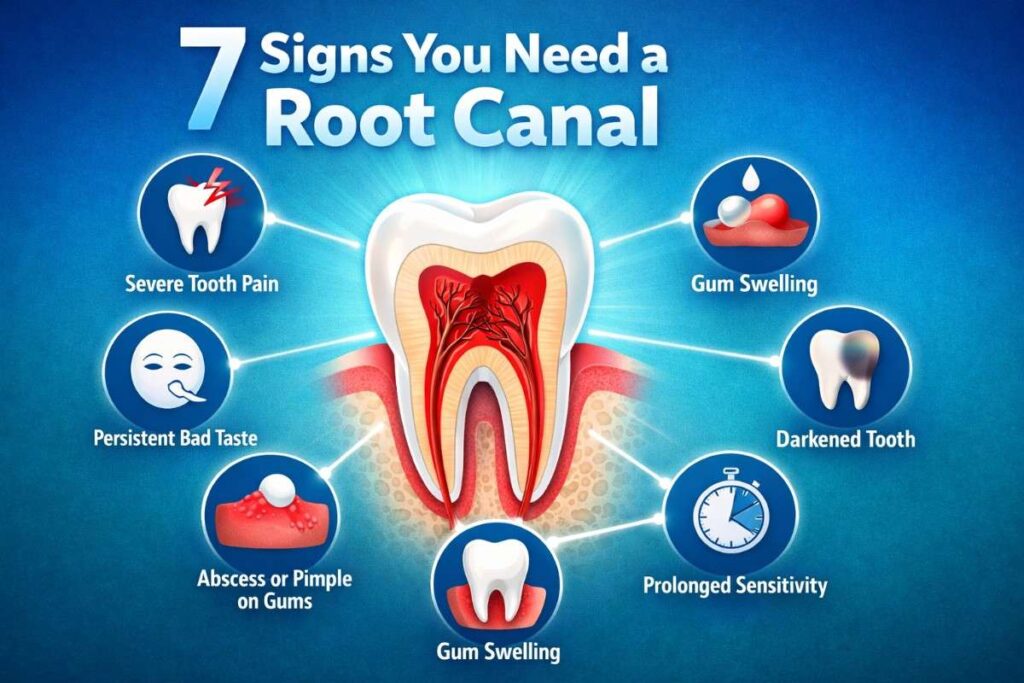
Root canal treatment is one of the most misunderstood dental procedures. Many patients fear it unnecessarily, but the truth is that a root canal saves your natural tooth and eliminates pain. At Smile Scape Dental Care, we help patients understand when this essential treatment is necessary.
TABLE OF CONTENTS
- What is a Root Canal?
- Sign 1: Severe Toothache Pain
- Sign 2: Prolonged Sensitivity to Temperature
- Sign 3: Discoloration or Darkening of the Tooth
- Sign 4: Swelling in the Gums or Face
- Sign 5: A Pimple-Like Bump on the Gums
- Sign 6: Pain When Chewing or Applying Pressure
- Sign 7: Cracked or Chipped Tooth When to Seek Immediate Care
- The Root Canal Process at Smile Scape
- Root Canal Success Rate
- Aftercare Tips
- Root Canal vs. Extraction Common
- Root Canal Myths
- Prevention is Key
- Why Choose Smile Scape for Root Canal Treatment?
- Conclusion
What is a Root Canal?
A root canal is an endodontic procedure that removes infected or damaged pulp from inside your tooth. The pulp contains nerves and blood vessels that become inflamed or infected due to deep decay, trauma, or repeated dental work. Once removed, the canal is cleaned, sealed, and restored with a crown or filling.
Sign 1: Severe Toothache Pain
The most obvious sign of needing a root canal is intense, sharp pain in a specific tooth. This pain may be:
- Constant or intermittent
- Triggered by chewing or biting
- Present when eating hot or cold foods
- Radiating to the jaw or neck
- regular dental checkups
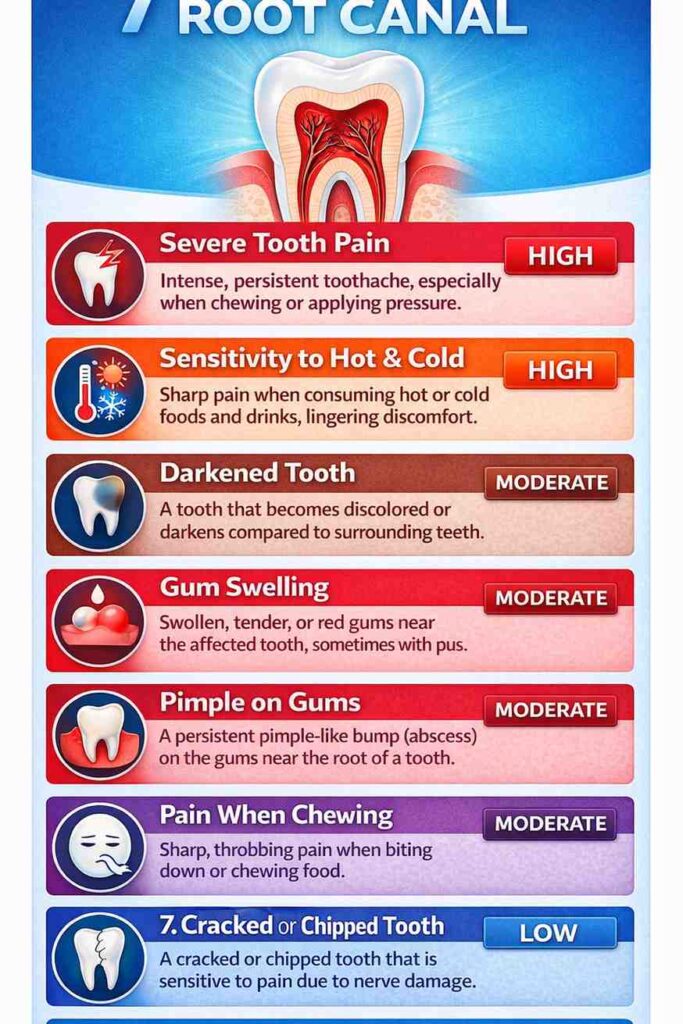
What it means: The pulp is likely inflamed or infected, causing a severe inflammatory response.
Sign 2: Prolonged Sensitivity to Temperature
If your tooth remains sensitive to hot or cold temperatures even after the stimulus is removed (lingering sensitivity for more than a few seconds), this indicates pulp damage.
What it means: Cold or hot sensitivity that persists suggests the nerve is compromised and may need treatment.
Sign 3: Discoloration or Darkening of the Tooth
A tooth that appears gray, black, or dark brown compared to surrounding teeth could indicate:
- Internal bleeding
- Pulp necrosis (death of the pulp tissue)
- Advanced decay reaching the pulp chamber
What it means: Discoloration often signals that the tooth’s internal structures are deteriorating.
Sign 4: Swelling in the Gums or Face
Visible swelling around a specific tooth or in the surrounding gums and face may indicate an abscess—a bacterial infection at the tooth’s root, gum disease treatment.
What it means: An abscess requires immediate root canal treatment to prevent the infection from spreading to other areas.
Sign 5: A Pimple-Like Bump on the Gums
A small, pus-filled bump near the affected tooth is a sign of a tooth abscess. This bump may come and go, releasing pus.
What it means: This is a definitive sign of a root canal infection and requires urgent treatment, emergency dental care.
Sign 6: Pain When Chewing or Applying Pressure
If biting down on a specific tooth causes sharp pain, it may be because the tooth’s pulp is inflamed. Pressure can intensify the inflammation inside the tooth.
What it means: Bite sensitivity often indicates advanced decay or pulp damage.
Sign 7: Cracked or Chipped Tooth
A visible crack, chip, or fracture that exposes the inner tooth structure can allow bacteria to enter the pulp chamber.
What it means: Even without pain, a cracked tooth that reaches the pulp will eventually require root canal treatment.
When to Seek Immediate Care
Don’t wait to schedule a consultation if you experience:
- Severe, unrelenting toothache
- Facial swelling
- Signs of infection (fever, malaise)
- Sudden drainage of pus
These symptoms indicate a serious infection that requires urgent treatment to prevent complications.
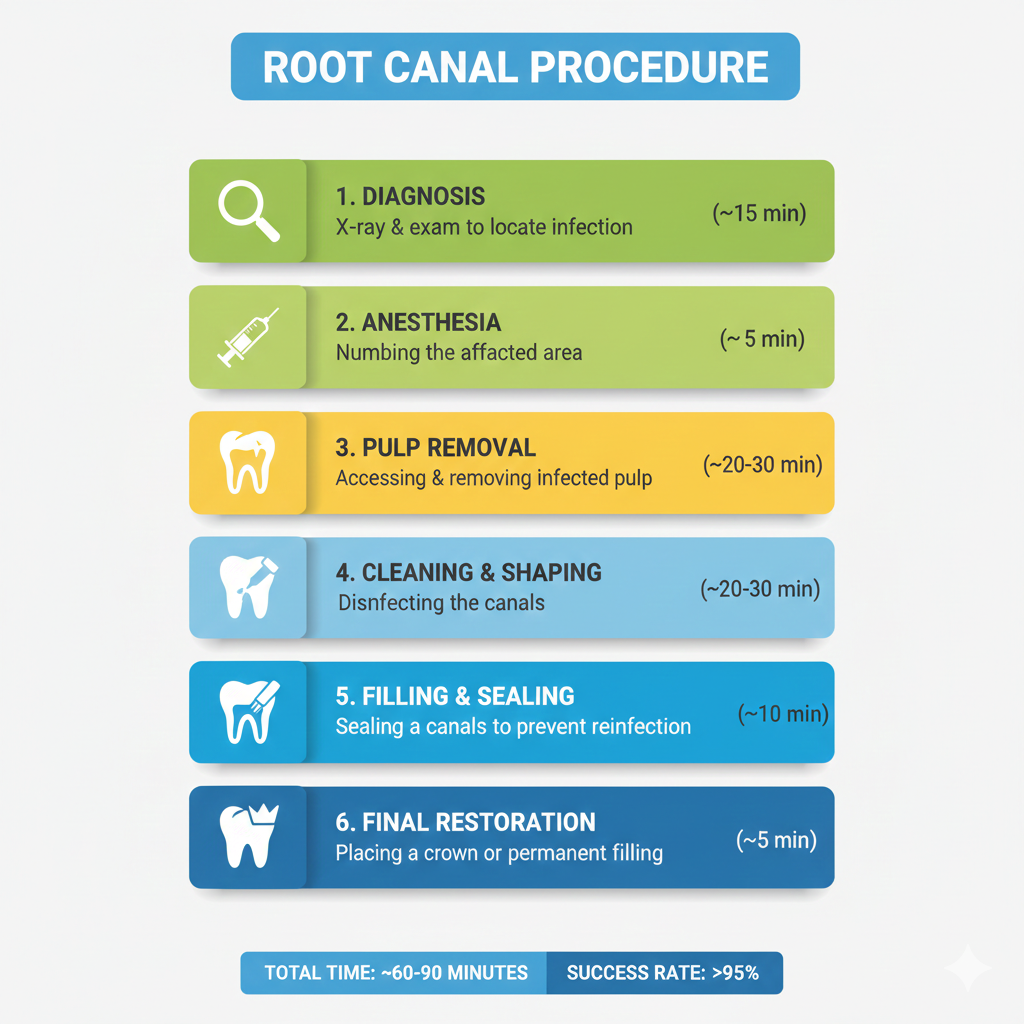
The Root Canal Process at Smile Scape
At Smile Scape Dental Care, we make root canal treatment comfortable and efficient-According to the American Association of Endodontists…:
- Diagnosis – We use advanced imaging to assess the extent of damage
- Anesthesia – Local anesthesia ensures you remain pain-free during the procedure
- Pulp Removal – We carefully remove the infected or damaged pulp
- Cleaning & Shaping – The canal is cleaned and shaped for proper sealing
- Filling – We fill the canal with biocompatible gutta-percha material
- Restoration – A crown or filling restores the tooth’s function and appearance
Root Canal Success Rate
Modern root canal therapy has a 95% success rate when performed by experienced endodontists. With proper care, a tooth that has undergone root canal treatment can last a lifetime.American Dental Association research
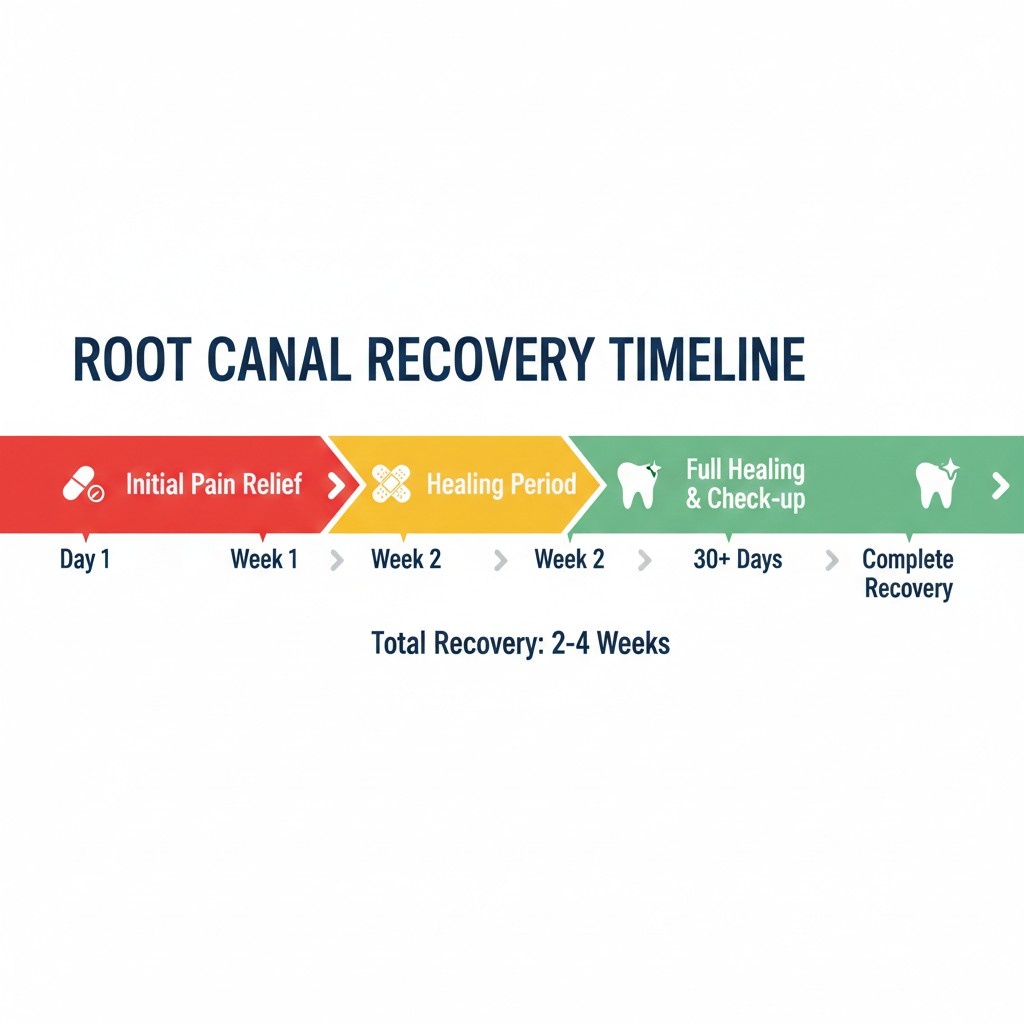
Aftercare Tips
Following your root canal treatment:
- Avoid chewing on the treated tooth until it’s fully restored
- Take prescribed antibiotics as directed
- Manage pain with over-the-counter pain relievers if needed
- Attend all follow-up appointments
- Maintain excellent oral hygiene
Root Canal vs. Extraction
Some patients ask whether extraction is a better option than root canal treatment. The answer is almost always no. Here’s why:dental implants
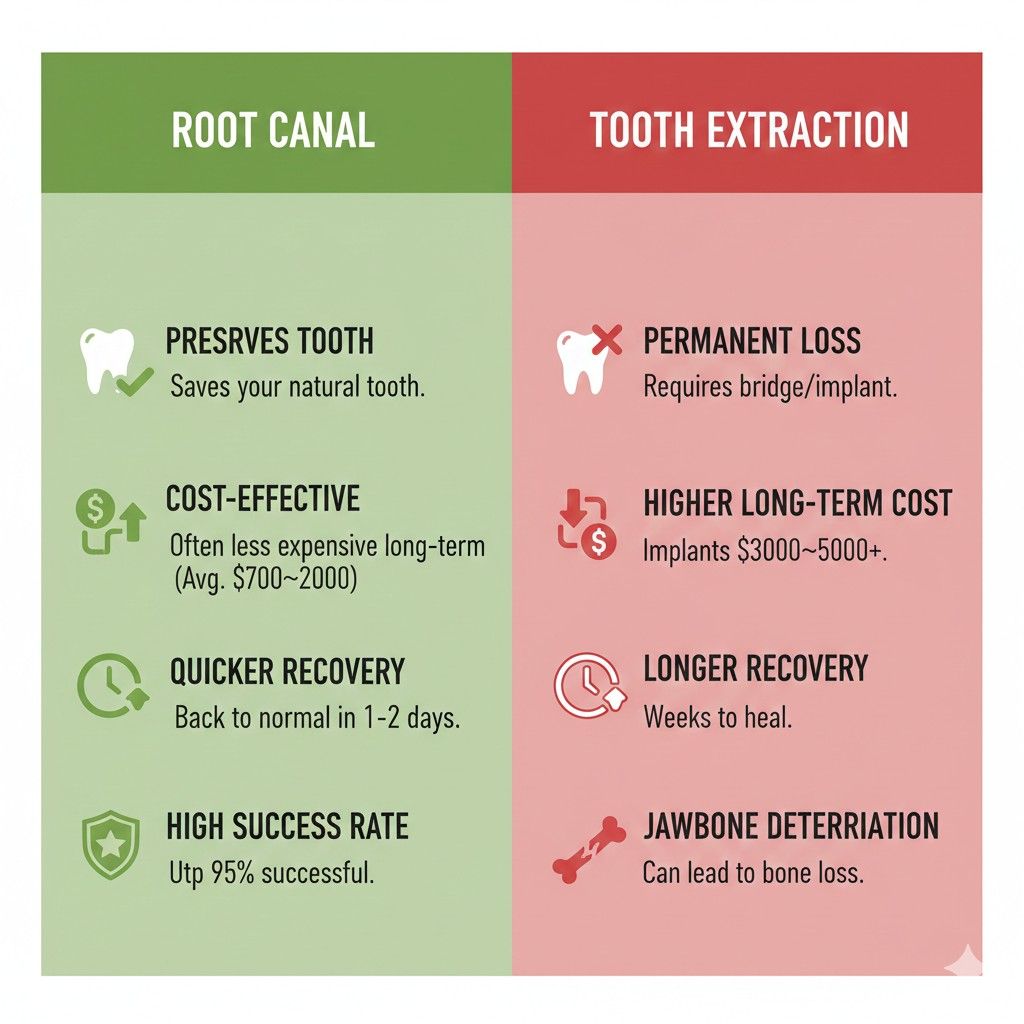
| Factor | Root Canal | Extraction |
|---|---|---|
| Natural tooth preservation | ✓ Saves your tooth | ✗ Removes tooth |
| Cost over time | Lower (single treatment) | Higher (implant/bridge needed) |
| Bone health | ✓ Preserves jawbone | ✗ Causes bone loss |
| Long-term function | ✓ Functions like natural tooth | May require replacement |
| Timeline | 1-2 appointments | Weeks to months for replacement |
Common Root Canal Myths
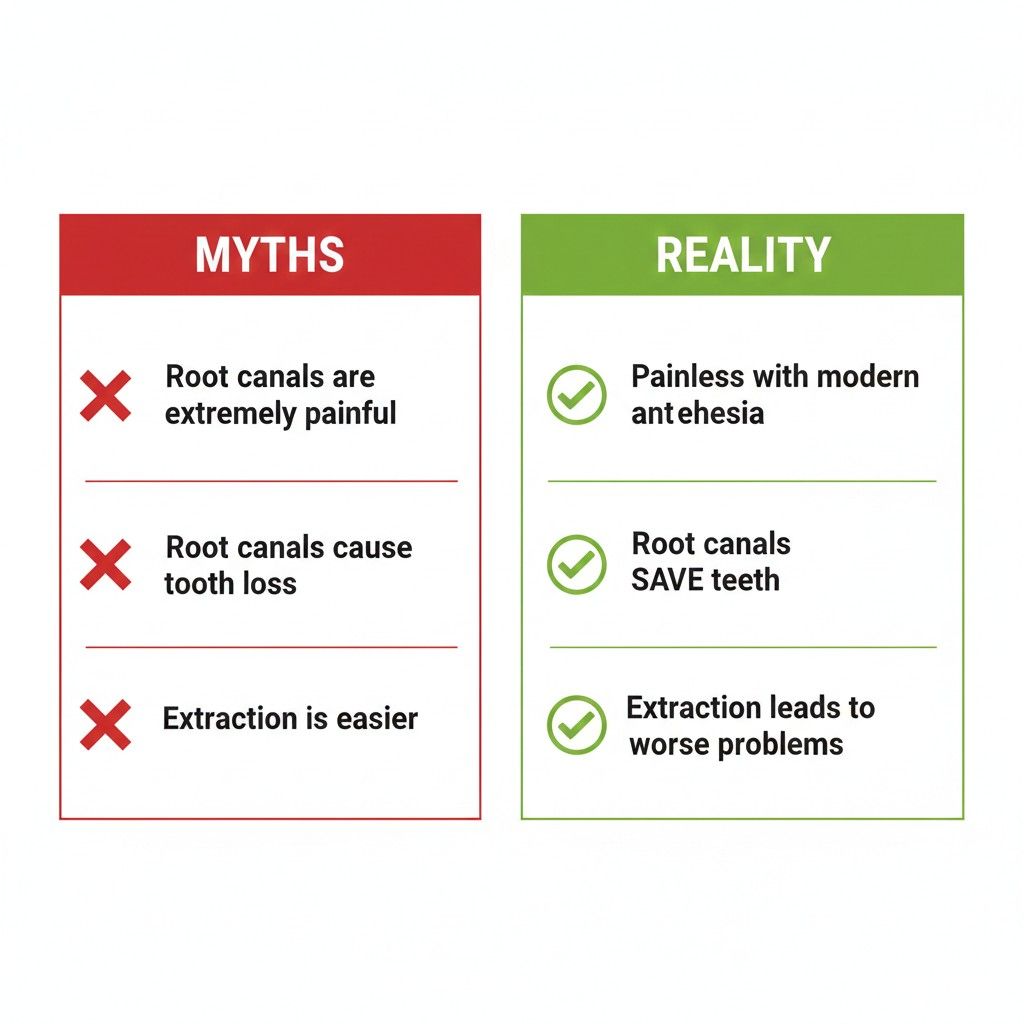
Myth 1: “Root canals are extremely painful” Reality: Modern anesthesia makes root canals no more uncomfortable than a filling.
Myth 2: “The pain I feel is from the root canal” Reality: The pain you feel is from the infection. The root canal relieves that pain.
Myth 3: “Extracted teeth are easier than root canals” Reality: Missing teeth lead to bone loss, bite problems, and require costly replacements.
Prevention is Key
While root canal treatment is highly successful, prevention is always better. Protect your teeth by:
- Brushing twice daily with fluoride toothpaste
- Flossing daily
- Limiting sugary foods and drinks
- Wearing a mouthguard during sports
- Addressing cavities promptly
- Getting regular dental checkups every 6 months
Why Choose Smile Scape for Root Canal Treatment?
At Smile Scape Dental Care, our team brings:
- Years of specialized endodontic training
- Advanced diagnostic technology
- Commitment to patient comfort
- Gentle, efficient treatment techniques
- Transparent communication throughout your care
Conclusion
If you’re experiencing any of these seven signs, don’t delay seeking treatment. Early intervention can save your tooth and prevent complications. Contact Smile Scape Dental Care today for a comprehensive evaluation and personalized treatment plan.
Schedule your consultation now. We’re here to help you maintain your healthy, beautiful smile.